- Thread Author
- #1
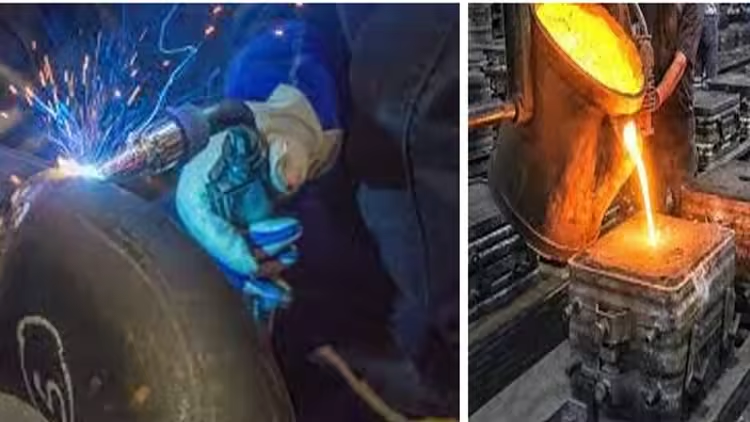
Free Download Mechanical & Industrial Engineers Carrier skills & knowledge
Published 1/2026
MP4 | Video: h264, 1920x1080 | Audio: AAC, 44.1 KHz, 2 Ch
Language: English | Duration: 37m | Size: 500 MB
1. Core Skills, Technical Expertise, and Industry Knowledge. 2. Essential Competencies for Engineering Excellence.
What you'll learn
After completing a course in mechanical and industrial engineering, students typically gain a solid foundation in the principles and practices of both fields.
Mechanical & Industrial Engineering fields require dedication and focusing. If you enjoy math and physics, these are great fields to pursue. It is a challenging
Weak math foundation, ignoring practical skills
Focus on improving processes, systems, and efficiencies. Students learn about optimizing operations in manufacturing, quality control, and human factors engg.
Requirements
If you enjoy math and physics, these are great fields to pursue
Description
This course introduces students to the essential career skills and technical knowledge required for success in Mechanical and Industrial Engineering fields. Students will explore fundamental engineering principles, including mechanical systems, manufacturing processes, materials and quality control. The course also emphasizes problem-solving, critical thinking, teamwork, communication, and workplace safety.Learners will gain an understanding of how engineers design, analyze, and improve systems to increase efficiency, productivity, and sustainability in real-world industries. Through practical activities and career exploration, students will develop skills needed for further education, technical training, or entry-level engineering-related careers.1. Mechanical Engineering - Subtitles / Sub-FieldsThermodynamics & Heat TransferFluid MechanicsMachine DesignManufacturing ProcessesMaterials Science & MetallurgyMechanical VibrationsDynamics & Kinematics of MachinesControl SystemsRobotics & MechatronicsAutomotive EngineeringAerospace EngineeringRenewable & Energy SystemsHVAC & RefrigerationFinite Element Analysis (FEA)Computational Fluid Dynamics (CFD)Tribology (Friction, Wear & Lubrication)2. Industrial Engineering - Subtitles / Sub-FieldsOperations ResearchProduction Planning & ControlSupply Chain ManagementQuality Engineering & Six SigmaLean ManufacturingWork Study & ErgonomicsEngineering EconomicsProject ManagementSystems EngineeringLogistics & Transportation SystemsA. Mechanical Engineering - Safety Notes1. Workshop SafetyAlways wear PPE: safety goggles, gloves, safety shoes, and helmetAvoid loose clothing, jewelry, or long hair near machinesKeep the work area clean and dryUse the right tool for the right jobNever operate machines without proper training2. Machine SafetyEnsure machine guards are in place before operationDo not touch moving or rotating partsSwitch off power before maintenance or adjustmentsFollow lockout-tagout proceduresReport faulty machines immediately3. Electrical SafetyCheck cables and insulation before useNever touch electrical equipment with wet handsDo not overload circuitsUse proper grounding (earthing)Only authorized personnel should repair electrical systems4. Fire & Heat SafetyKeep flammable materials away from heat sourcesKnow the location of fire extinguishersUse correct extinguisher type (CO₂, foam, dry powder)Handle hot surfaces with heat-resistant gloves5. Material Handling SafetyUse cranes, hoists, or trolleys for heavy loadsFollow proper lifting techniquesDo not exceed load limitsStore materials securelyB. Industrial Engineering - Safety Notes1. Workplace SafetyMaintain proper lighting and ventilationKeep walkways free from obstaclesFollow safety signs and markingsMaintain proper housekeeping2. Ergonomics & Human FactorsDesign workstations to reduce strain and fatigueMaintain correct posture while workingTake regular breaks during repetitive tasksAdjust chair, desk, and screen height properly3. Industrial Hazard ControlIdentify physical, chemical, and mechanical hazardsUse risk assessment methodsImplement control measures (engineering, administrative, PPE)Follow standard operating procedures (SOPs)4. Chemical SafetyLabel all chemicals clearlyUse masks and gloves when handling chemicalsStore chemicals according to safety standardsKnow emergency spill procedures5. Safety Management SystemsConduct regular safety trainingFollow safety audits and inspectionsReport accidents and near-misses
Who this course is for
Fresh Engineering graduates, industry employees, researhers
Homepage
Code:
https://www.udemy.com/course/mechanical-industrial-engineers-carrier-skills-knowledge/
Code:
[b]DDownload[/b]
https://ddownload.com/3jvm5as2zgje/sbujk.Mechanical..Industrial.Engineers.Carrier.skills..knowledge.rar
RapidGator
https://rg.to/file/508dfa7acbecb62f7cd3e800857db268/sbujk.Mechanical..Industrial.Engineers.Carrier.skills..knowledge.rar.html
[b]AlfaFile[/b]
https://alfafile.net/file/AFDu2/sbujk.Mechanical..Industrial.Engineers.Carrier.skills..knowledge.rar

FreeDL
https://frdl.io/8s4dik8uw5ce/sbujk.Mechanical..Industrial.Engineers.Carrier.skills..knowledge.rar.html